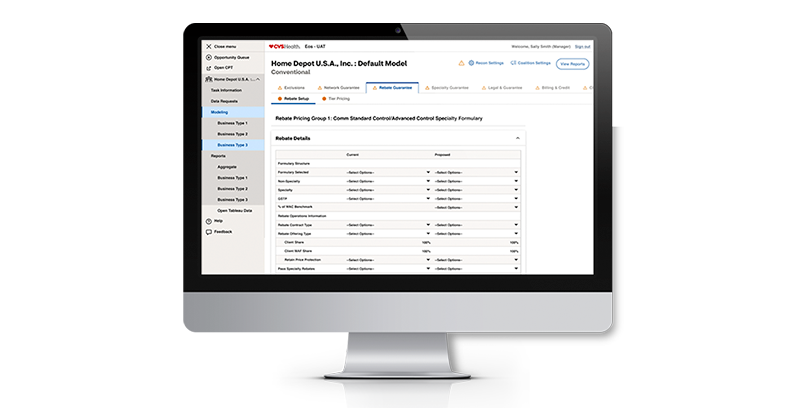
EOS underwriting model is a web-based platform
EOS is a large-scale, web-based platform built to support pharmacy benefit underwriters at CVS Health in evaluating and pricing benefit offerings for a wide range of clients — from health plans and employers to third-party administrators and standalone specialty groups. The complexity of the domain is significant: underwriters work across massive datasets, intricate pricing models, and highly customized client configurations. Designing for EOS means designing for density, precision, and edge cases at every turn.
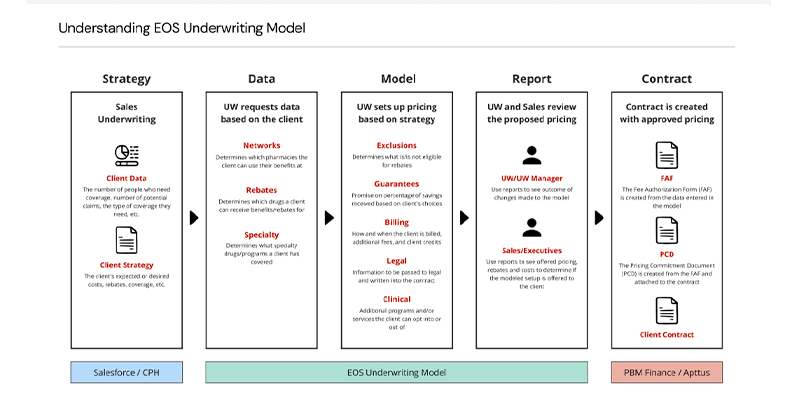
Designing through ambiguity.
My work on EOS centered around three interconnected challenges.
Integrating Coalitions: EOS was originally built for single-client workflows. As the business grew, coalitions — groups of organizations partnering together to negotiate better pharmacy benefits — introduced a new layer of complexity. Where the system once dealt with one client, it now needed to support sub-clients nested within a parent structure, each with their own rules and configurations. Retrofitting this into an already robust platform has downstream implications across every workflow underwriters depend on. We navigated this through an agile process, iterating quickly and staying in close feedback loops with underwriters throughout.
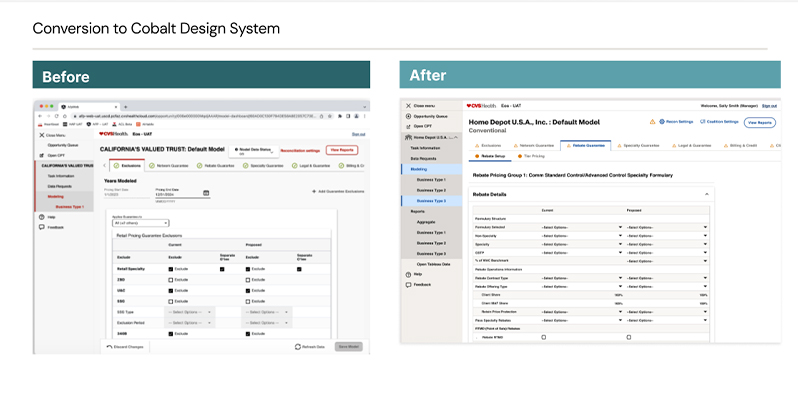
Conversion to the Cobalt Design System: EOS also needed a full migration to CVS's new Cobalt brand and enterprise design system. As one of the largest platforms in the CVS ecosystem, the scope was significant — auditing legacy prototypes, systematically replacing components with Cobalt equivalents, and establishing a clear standard so all future EOS work reflected the new design system from the start.
Discovery Work: Running alongside both efforts was a set of discovery initiatives aimed at bringing more facets of underwriting into EOS. The most significant was Standalone Specialty — a segment that had historically lived in a separate legacy system. The goal was to retire that system and fully integrate it into EOS. What made this work stand out was the team's commitment to doing discovery right: in close partnership with product, clients, and technical stakeholders, with enough time to map data flows, surface risks, and build a roadmap before moving forward.
Design lead across strategy, research, and execution.
As Senior Product Designer, I owned the end-to-end design process — working directly with product weekly to translate complex underwriting problems into design solutions, facilitating discovery workshops with stakeholders, and going directly to underwriters when we needed real answers instead of filtered requirements
I produced and maintained high-fidelity Figma prototypes as a living source of truth, continuously migrating legacy work to the Cobalt design system to keep the team building from a current foundation. I also owned developer handoff, ensuring what shipped matched the intent of the design.
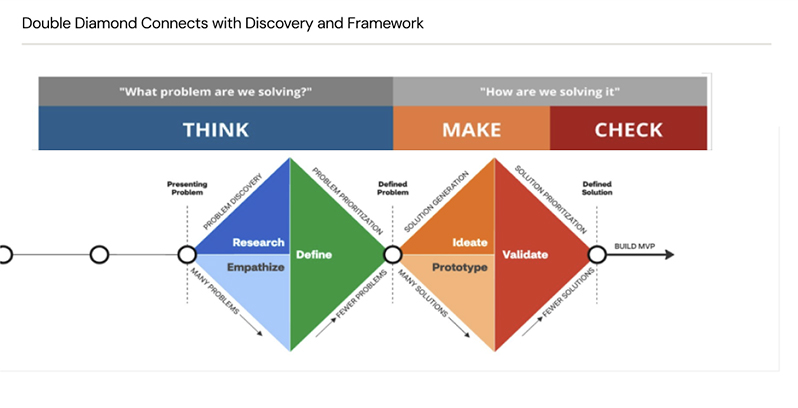
Discovery → Define → Develop → Deliver.
Phase 1 — Discovery: Stakeholder alignment workshops, user interviews, session replay analysis.
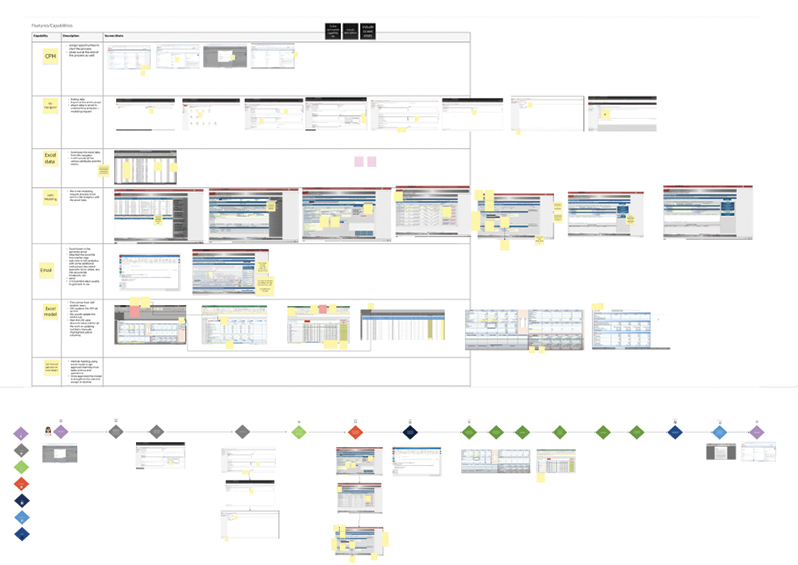
Phase 2 — Define: Synthesized findings into a prioritized problem map and opportunity areas.
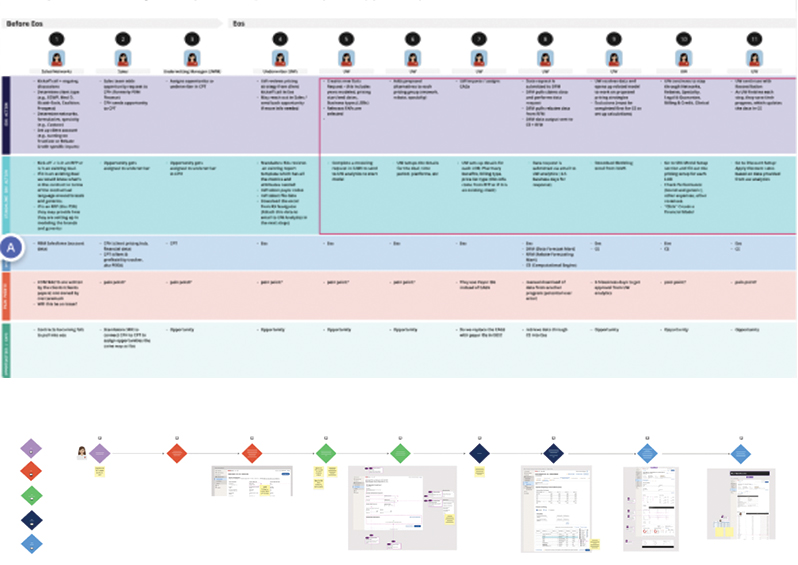
Phase 3 — Develop: Generating ideas and solutions to tackle the problem.
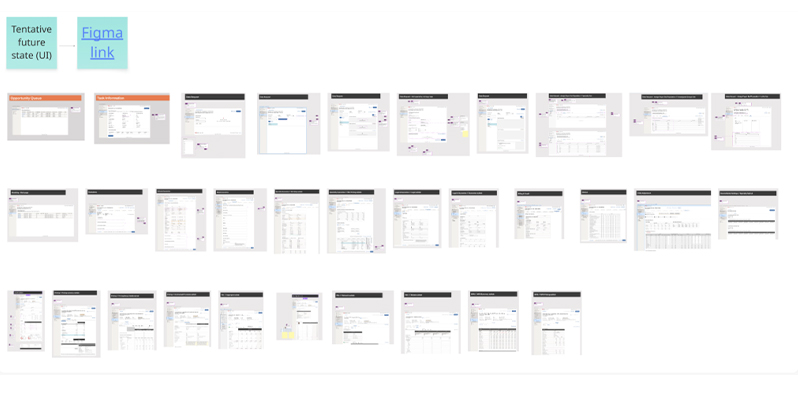
Phase 4 — Deliver: Progressive wireframing through high-fidelity. Weekly critique with engineering and product leads.
What I'd do differently.
The biggest challenge we faced wasn't the discovery itself — it was the gap between discovery and implementation. We did the work rigorously, but when implementation got deprioritized due to budget constraints, that documentation sat. And in a domain as complex as underwriting, context decays fast.
Compounding that was the fact that each discipline documented things differently. Design had its own way of capturing decisions, product had theirs, and engineering had theirs. When you need to re-enter work after a long pause, piecing together the full picture from three different sources adds real friction — and in a product this complex, that friction can feel like starting over.
What I'd advocate for is a unified documentation approach from the start — one source of truth that captures design, product, and technical decisions in a format everyone can read and build from. Not just for handoff, but designed to survive team changes and timeline gaps without losing the depth of what was learned.